


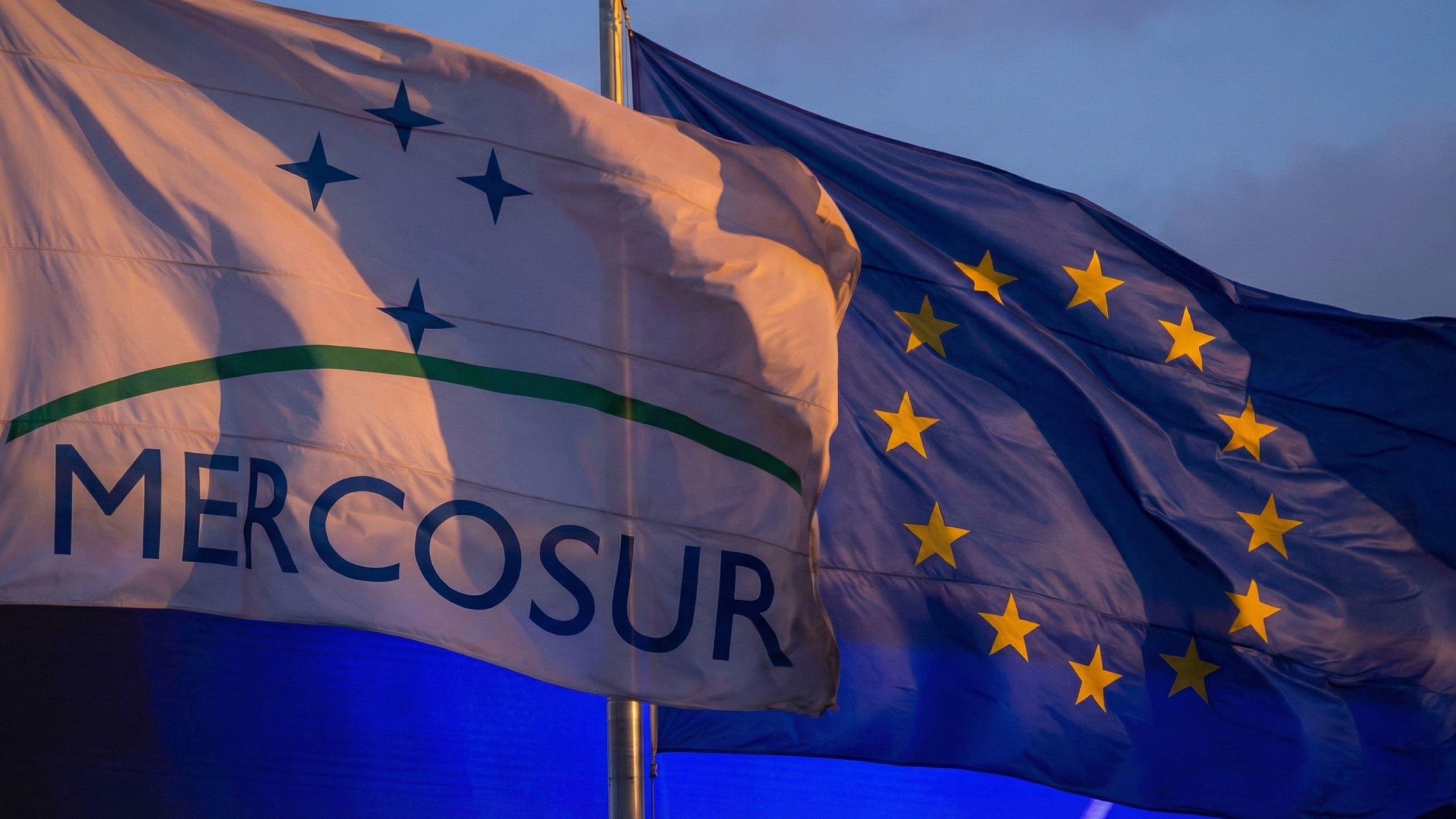
ABIMÓVEL (Brazilian Furniture Industry Association) views the official signing of the Free Trade Agreement between Mercosur and the European Union—held this Saturday, January 17, 2026, in Asunción, Paraguay—as a relevant milestone in the strategic repositioning of Brazil’s foreign trade, amid an international environment marked by increasing fragmentation, rising tariff and non-tariff barriers, and declining predictability in markets traditionally strategic for the industry.
After more than 25 years of negotiations, the agreement establishes a new level of relations between two blocs that together account for approximately 720 million consumers and a combined GDP exceeding US$ 22 trillion. For Brazil, it represents a structural initiative with the potential to expand the country’s degree of international integration and reduce reliance on a limited number of destinations in an increasingly volatile global environment.
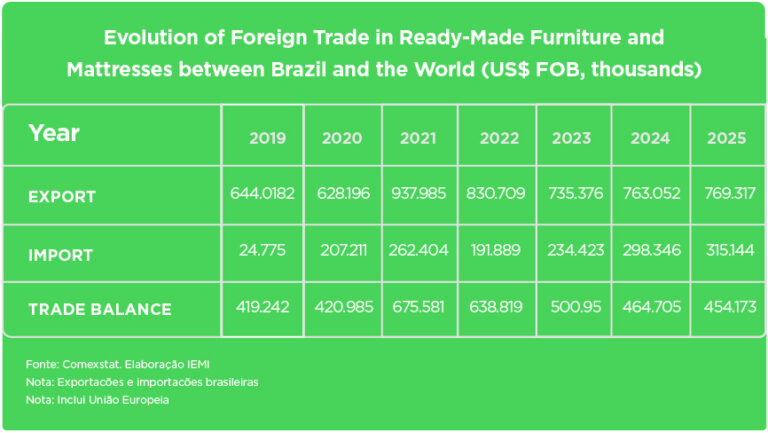
For the Brazilian furniture industry in particular, the signing of the agreement takes on added relevance given the forced repositioning of the sector’s foreign trade throughout 2025, driven primarily by changes in the United States trade policy. Although the U.S. remains the main destination for Brazilian furniture and mattress exports, its share declined significantly over the past year due to the imposition of additional tariffs and the resulting disruption of contracts. In 2025, the U.S. share of sector exports fell to 23.5%, after several years operating at levels close to or above 30%.
In this context, expanded access to the European market takes on an even more strategic role as an alternative for destination diversification, risk mitigation, and rebalancing of the export mix. Sector studies and technical assessments conducted by ABIMÓVEL in partnership with IEMI – Market Intelligence indicate that the agreement’s entry into force could generate a 20% increase in Brazilian furniture exports to the European Union as early as the first year of implementation—an expressive gain for a market historically characterized by tariff barriers and stringent regulatory requirements.
Currently, European countries such as France, Germany, Spain, and Portugal already import Brazilian furniture, albeit with relatively modest shares compared to the region’s potential and the productive capacity of Brazil’s industry. In 2025, the European Union accounted for 9.3% of total Brazilian exports of furniture and mattresses.
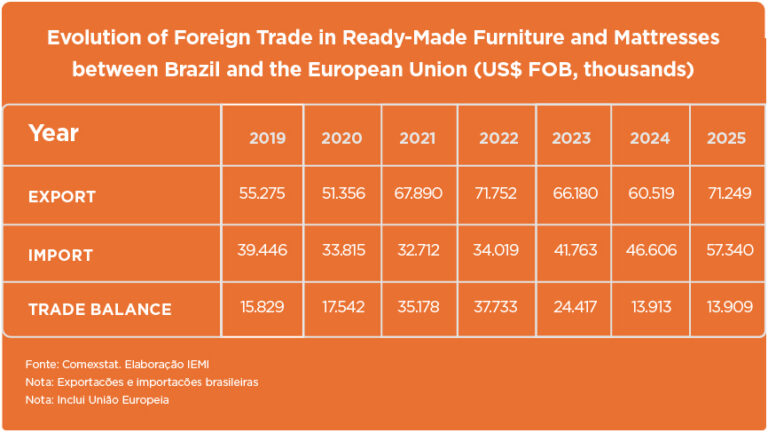
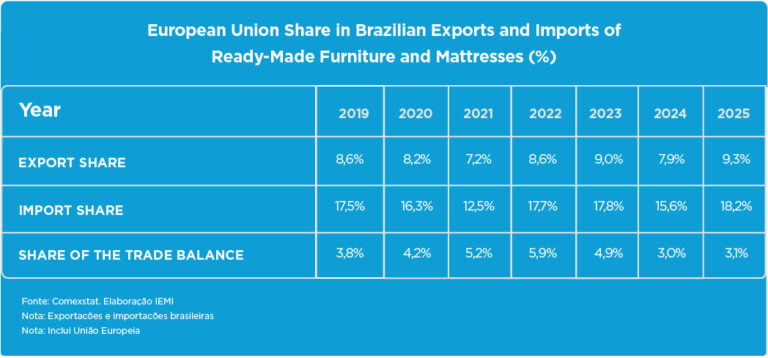
France, although positioned against the agreement in the European political debate, maintains concrete commercial relevance for the sector: it was the eighth-largest destination for Brazilian furniture exports in 2024 and maintained a 2.8% share in 2025. It is a sophisticated market with consistent demand for products associated with design, sustainability, traceability, and value added—attributes in which the Brazilian industry has been making structured progress.
Beyond the European Union, ABIMÓVEL highlights that Brazil already maintains trade agreements with European countries outside the bloc, particularly members of EFTA (the European Free Trade Association)—Switzerland, Norway, Iceland, and Liechtenstein—markets characterized by high purchasing power and stringent technical requirements. In addition, the United Kingdom, even after Brexit, remains one of the main European destinations for Brazilian furniture, ranking fourth in 2024, reinforcing the strategic importance of Europe as a whole for diversifying the sector’s exports.
The association notes, however, that the benefits of the agreement are not automatic. Access to the European market will continue to be conditioned on high technical, environmental, and regulatory standards, particularly requirements related to wood traceability, production compliance, and sustainability, reinforced by the Deforestation Regulation (EUDR), whose implementation has been postponed but not relaxed. As such, the agreement expands opportunities while also demanding greater technical, organizational, and strategic preparedness from Brazilian companies.
Alongside the signing of the treaty, Brazil has been strengthening its institutional and commercial presence in Europe through a consistent agenda of international promotion and participation in major industry events. As early as next week, the country will be present at IMM Cologne 2026 in Germany, one of the leading global showcases for contemporary furniture. In April, the Brazilian industry will again take part in Salone del Mobile.Milano 2026, the world’s leading trade fair for design and furniture, which is essential for positioning higher value-added products and building the sector’s international image.
Conversely, ABIMÓVEL observes that Brazilian imports of furniture from the European Union have historically been concentrated in higher value-added categories, such as authorial design products, premium solutions, specialized contract furniture, and items with high technological content. These segments serve specific market niches and do not undermine the competitiveness, production scale, or diversity of the Brazilian furniture industry, which is fully capable of meeting domestic demand and competing internationally across different price points, quality levels, and market positioning. In this sense, the agreement should be understood as an instrument of economic and commercial integration, reinforcing the need for balanced competitive conditions and policies that preserve the industrial base in the countries involved.
For ABIMÓVEL, the signing of the Mercosur–European Union Agreement consolidates a strategic international repositioning for both regions, particularly at a time when markets such as the United States are adopting more restrictive and less predictable approaches.
“The Brazilian furniture industry has production scale, diversity, innovation capacity, increasing use of certified raw materials, and a consistent sustainability agenda. The agreement with the European Union can turn these capabilities into increasingly tangible competitive advantages, provided it is accompanied by regulatory certainty, ongoing technical dialogue, diplomacy, and domestic policies that preserve productive capacity, jobs, and investment,” ABIMÓVEL states.
The association will continue to act proactively alongside public authorities, international partners, and sector companies, monitoring the agreement’s ratification process and intensifying its actions in trade intelligence, international promotion, and technical support to help the Brazilian furniture industry meet the requirements of the world’s most demanding markets.
FURNITURE: OUR BUSINESS!
ABIMÓVEL – Brazilian Furniture Industry Association
Press Office: press@abimovel.com | +55 (14) 99156-0238